How an Australian Logistics Operator Became Audit Ready 40% Faster with ISO Toolkits
A realistic case study showing how Southern Cross Logistics Pty Ltd., a third-party logistics operator in Melbourne, used ISO Toolkits to standardize warehouse operations, transport controls, safety records, environmental practices, supplier management, and internal audit preparation across multiple distribution sites.
- Reduced ISO audit preparation time from 18 weeks to 11 weeks
- Standardized warehouse and transport records across 3 distribution centres and 72 delivery routes
- Improved safety and environmental control visibility before the external certification assessment
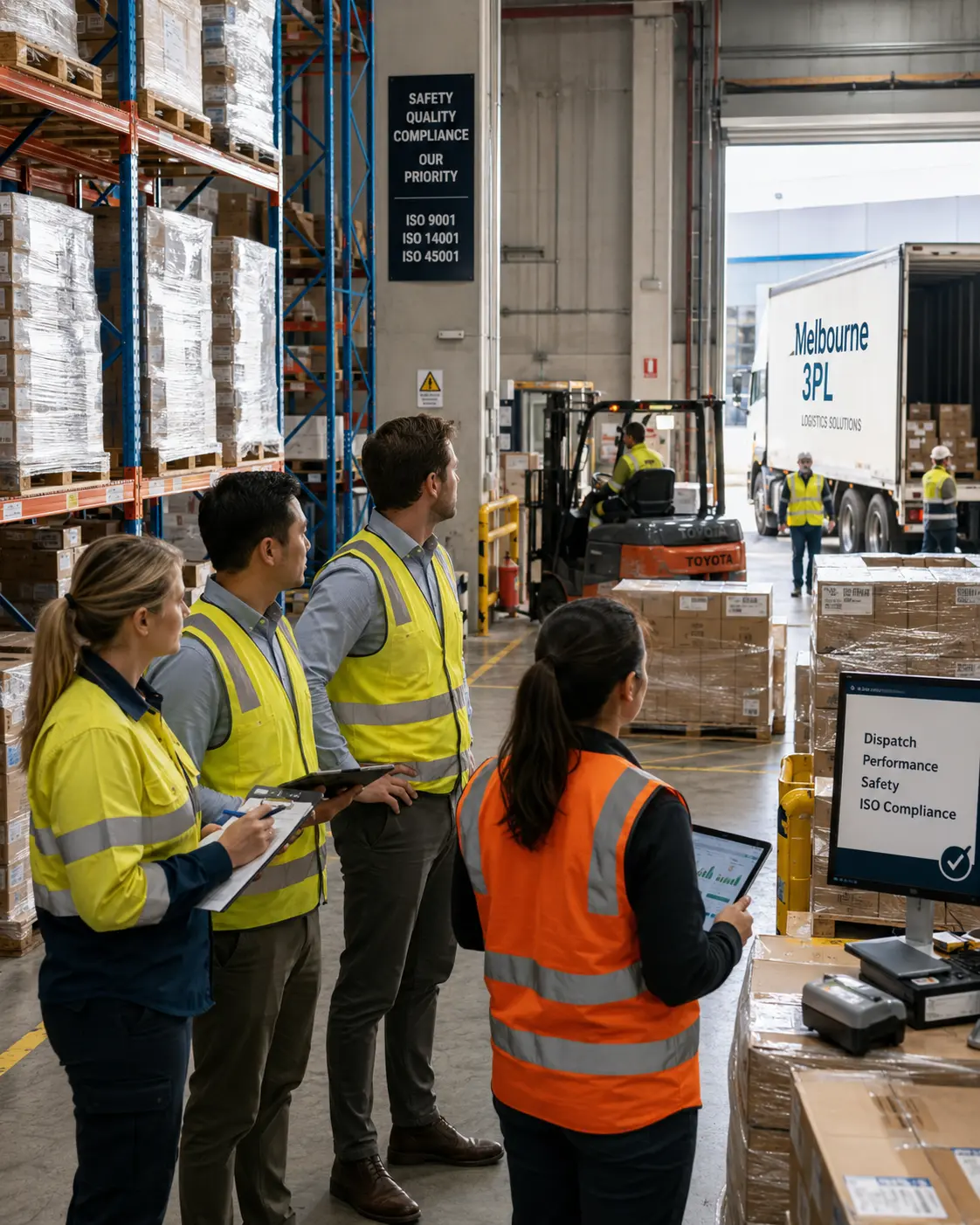
From site-by-site procedures to an integrated logistics management system
Business Challenge
Warehouse records, driver checklists, incident reports, supplier evaluations, and environmental controls varied between sites, making ISO readiness difficult to manage consistently.
18-week preparation cycleToolkit Solution
The company adopted editable procedures, risk registers, route checklists, safety forms, supplier records, CAPA trackers, training logs, and audit templates from the ISO Toolkits.
5 core toolkit modules deployedMeasured Outcome
After six months, the organization improved audit readiness, reduced repeat safety incidents, accelerated corrective action closure, and strengthened delivery process control.
0 major nonconformities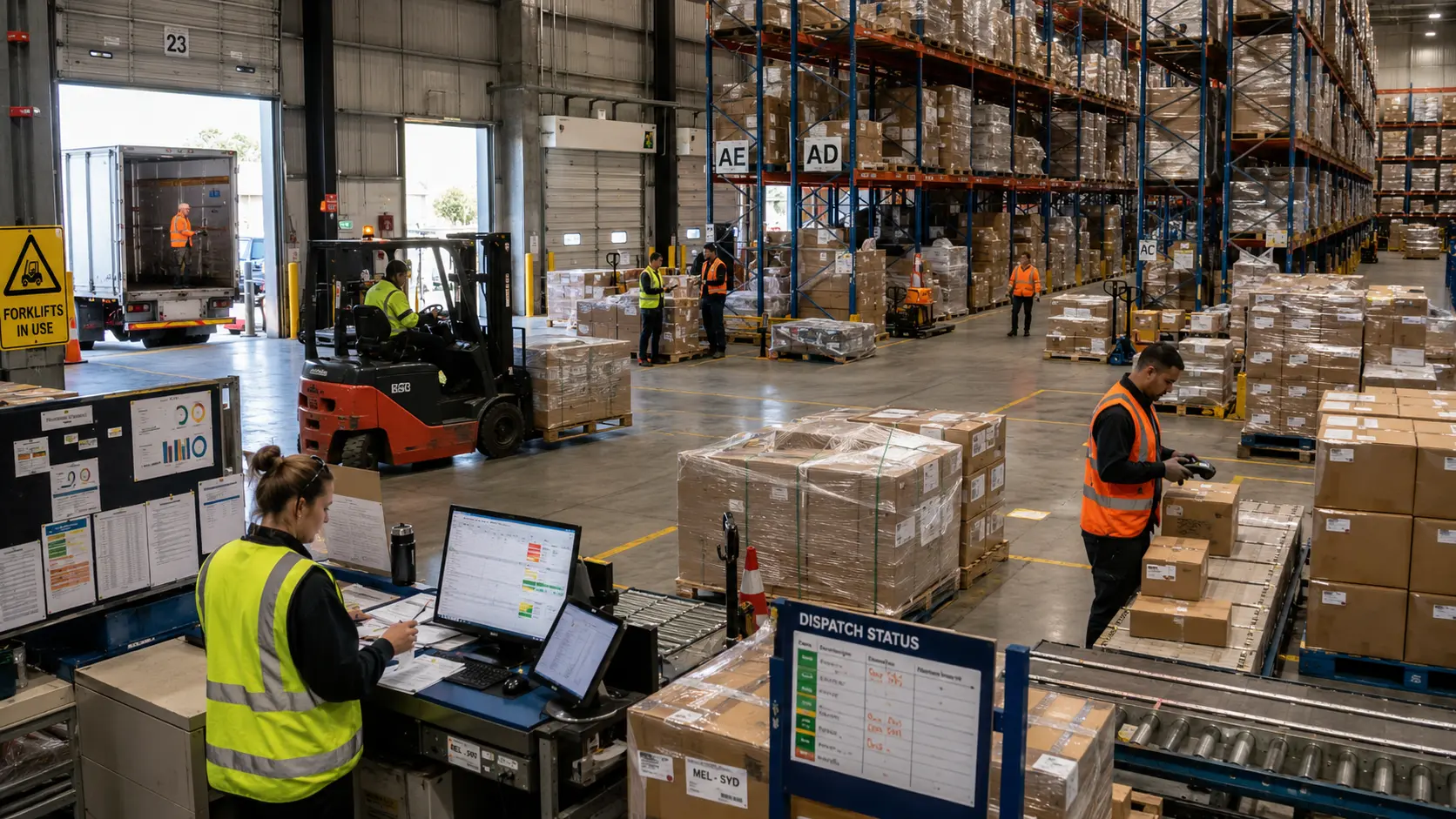
Third-party logistics provider serving retail, industrial, and e-commerce customers across Australia
Southern Cross Logistics Pty Ltd. is a Melbourne-based logistics operator providing warehousing, order fulfilment, cross-docking, last-mile distribution, and reverse logistics services. The company manages three distribution centres, a mixed fleet of owned and contracted vehicles, and daily deliveries across Victoria, New South Wales, and South Australia.
Before the ISO Toolkit project, the organization had capable operations managers and experienced warehouse supervisors. However, each site maintained its own forms, naming conventions, incident logs, supplier records, and vehicle inspection practices. Leadership needed a structured ISO implementation approach that could improve consistency without slowing down warehouse throughput or route dispatch.
Key implementation barriers slowing down logistics ISO readiness
Inconsistent warehouse records
Receiving checks, picking errors, dispatch inspections, stock damage reports, and handover notes were recorded differently across distribution centres.
Fragmented safety controls
Forklift inspections, manual handling observations, near-miss reports, and driver safety checklists were tracked in separate site-level files.
Weak environmental visibility
Fuel usage, packaging waste, spill controls, and waste contractor performance were monitored inconsistently and were not linked to a central register.
Manual audit preparation
The compliance team had to manually create gap assessments, internal audit plans, route interview questions, evidence lists, and CAPA trackers.
ISO Toolkits applied in the logistics environment
The implementation team selected toolkit components that supported warehouse control, route performance, safety compliance, environmental management, supplier oversight, audit evidence, and management review.
Operational Procedures
Document control, warehouse receiving, order fulfilment, dispatch control, supplier management, incident reporting, internal audit, and management review procedures.
Forms & Registers
Risk register, legal register, vehicle inspection checklist, forklift checklist, incident report, waste register, training matrix, and supplier evaluation record.
Audit Checklists
Clause-based audit questions mapped to ISO 9001, ISO 14001, and ISO 45001 requirements with evidence prompts for warehouse, transport, and dispatch teams.
KPI Dashboard
Monthly tracking for on-time dispatch, picking accuracy, delivery incidents, safety observations, CAPA closure, fuel efficiency, supplier performance, and audit findings.

Six-month logistics implementation roadmap
Gap Assessment
Reviewed warehouse procedures, transport records, safety controls, environmental practices, supplier files, and audit evidence against ISO requirements.
Toolkit Customization
Adapted templates to site workflows, route operations, document coding, approval rules, incident categories, and environmental reporting needs.
Supervisor Training
Trained warehouse supervisors, dispatch coordinators, fleet personnel, safety representatives, and site managers on required records and escalation paths.
Pilot Operation
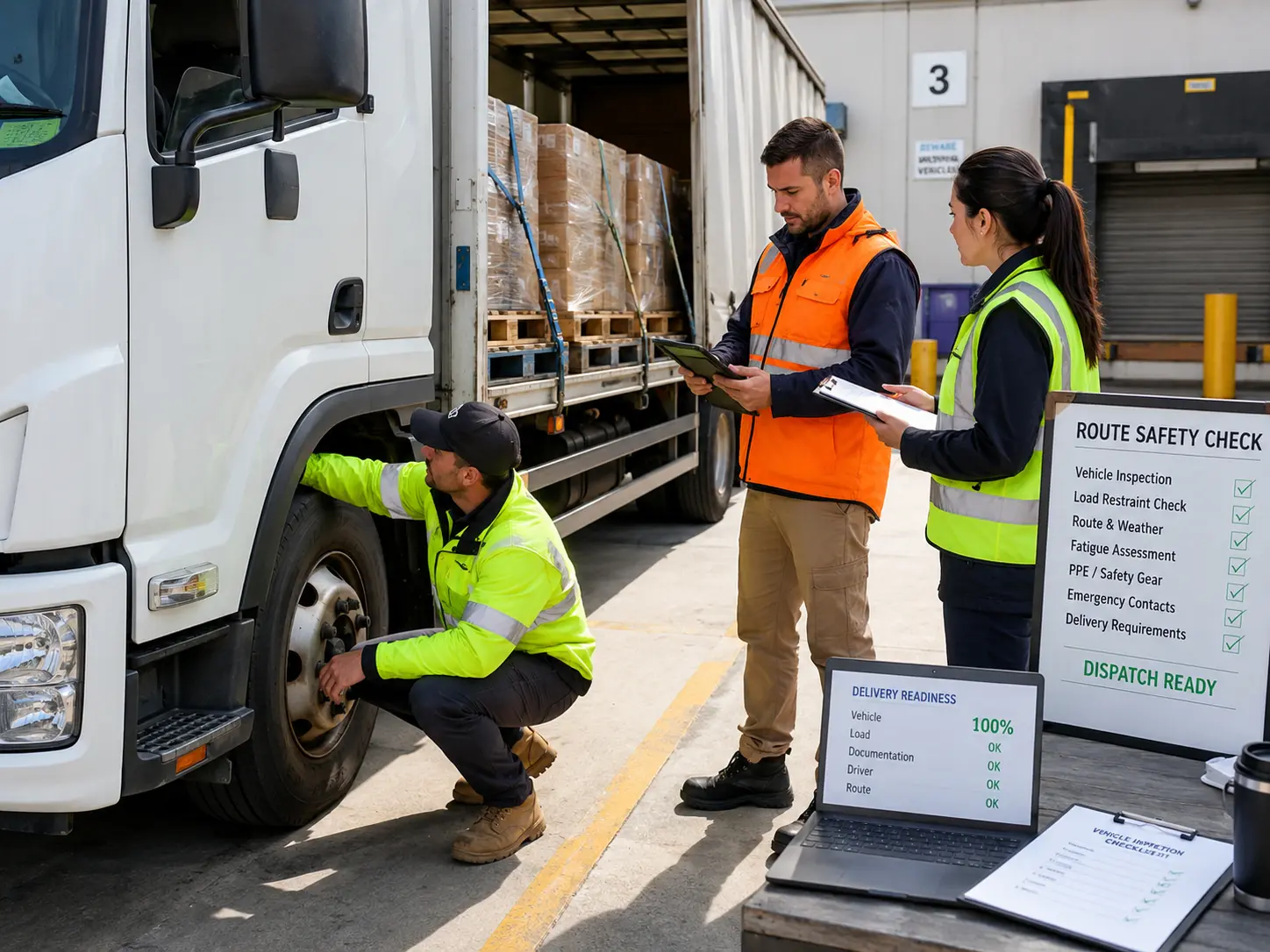
Tested route checklists, receiving inspection forms, incident reports, and CAPA trackers at one distribution centre before network-wide rollout.
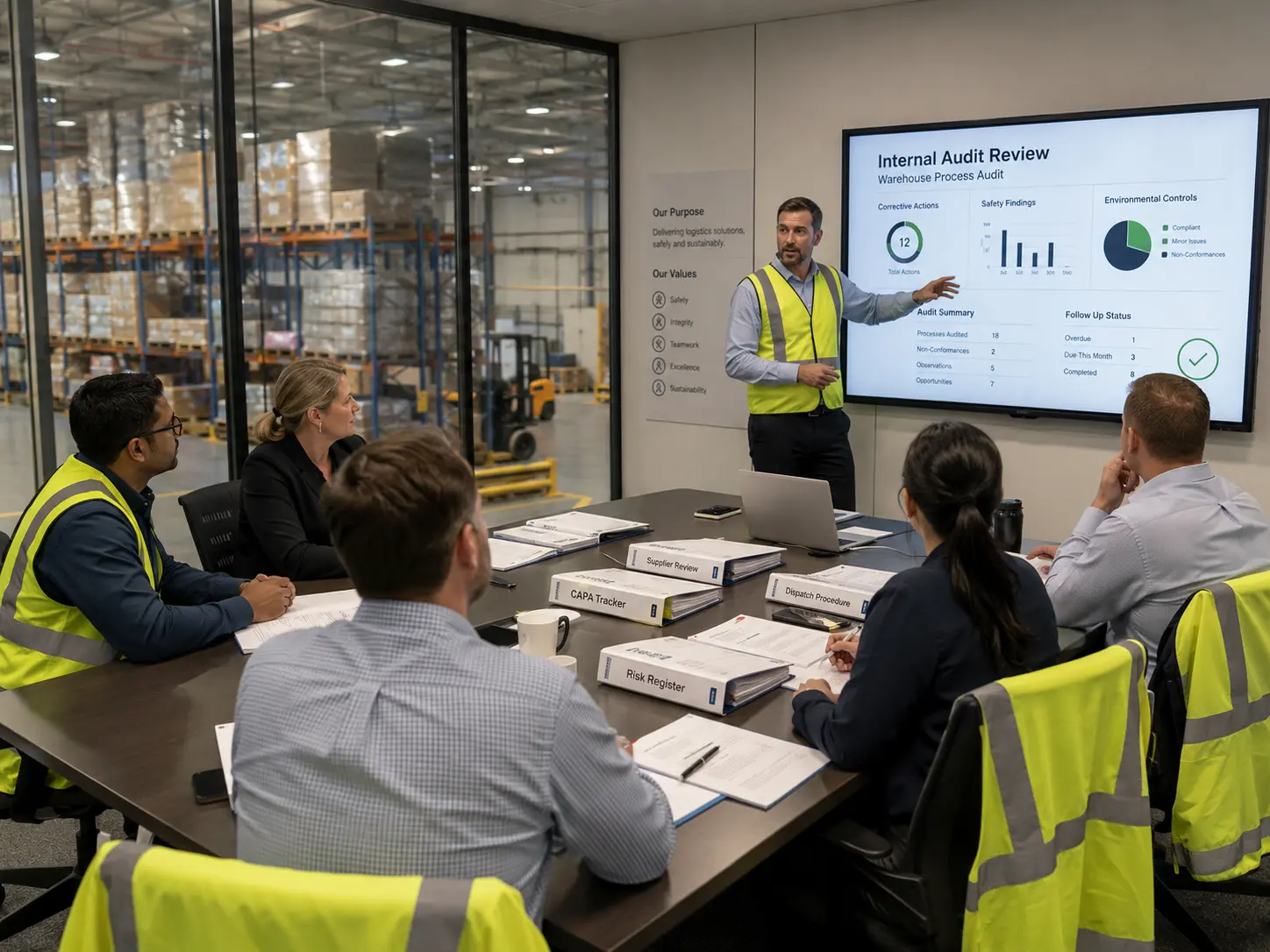
Internal Audit
Performed process audits across receiving, storage, picking, dispatch, transport safety, environmental controls, and supplier management.
Certification Readiness
Closed priority audit actions, prepared evidence packs, completed management review, and aligned site-level records before external assessment.
KPI results after six months
Measured six months after ISO Toolkit deployment. Figures are designed to reflect realistic logistics and warehousing implementation outcomes.
Faster audit readiness
Audit preparation time reduced from 18 weeks to 11 weeks.
Reduction in repeat safety incidents
Recurring warehouse and route safety incidents declined after standard checklists and incident logs were introduced.
Route checklist completion
Drivers and dispatch teams completed required route, vehicle, and delivery readiness checklists.
Faster CAPA closure
Average corrective action closure time improved through owner-based tracking and escalation rules.
Before vs. After ISO Toolkits
| Area | Before | After ISO Toolkits |
|---|---|---|
| Warehouse Control | Different receiving, picking, dispatch, and damage reporting formats by site | Standardized operational records, owners, approval status, and review dates across all distribution centres |
| Safety Management | Forklift checks, driver observations, and incident reports tracked separately | Integrated safety register, route checklists, incident reporting, CAPA tracking, and training evidence |
| Environmental Controls | Fuel, waste, spill response, and packaging records reviewed inconsistently | Environmental aspects register, waste log, spill response checklist, and supplier evidence review |
| Internal Audit | Ad-hoc audit questions and incomplete evidence capture across sites | Clause-based audit plan, site checklist, finding log, evidence register, and corrective action tracker |
“The ISO Toolkits helped us turn site-level practices into a consistent operating system. Instead of building every checklist from scratch, our managers focused on improving warehouse control, route safety, and audit evidence.
Ready to build an Audit Ready ISO system for logistics?
Use ISO Toolkits to accelerate documentation, standardize warehouse and transport controls, improve safety records, strengthen environmental management, and create a practical ISO system your logistics teams can actually use.