
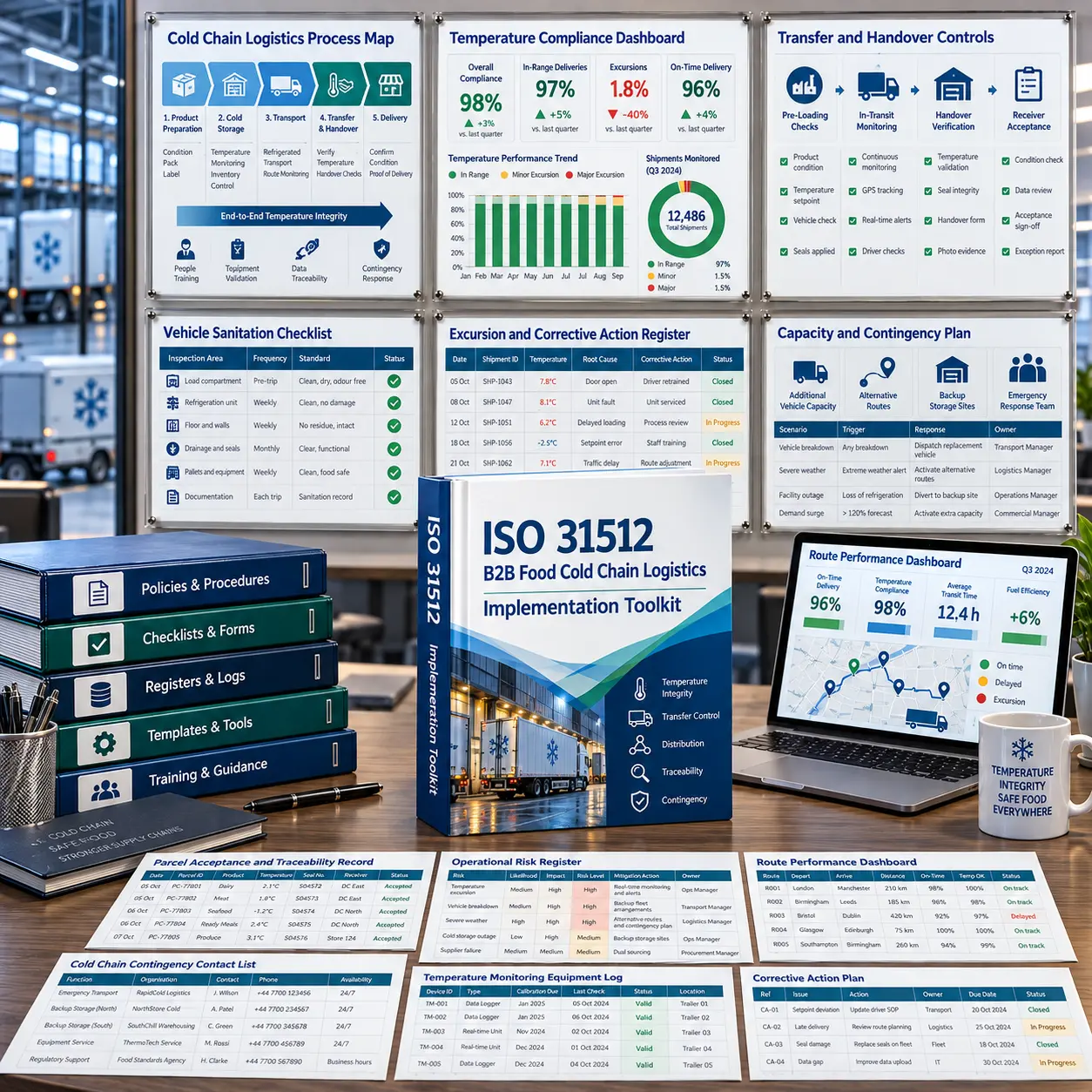
ISO 31512:2024 B2B Food Cold Chain Logistics Implementation Toolkit
The ISO 31512:2024 B2B Food Cold Chain Logistics Implementation Toolkit provides a comprehensive, easy to use set of premium templates and professionally structured implementation resources to help organizations establish, operate, monitor, and continually improve refrigerated storage and refrigerated transport services for foods in the business to business logistics sector.
Aligned with ISO 31512:2024, the toolkit translates cold chain storage and transport requirements into practical policies, procedures, registers, checklists, matrices, trackers, plans, and presentations. It supports enterprise cold chain governance, customer service requirements, network and capacity planning, refrigerated warehouse zoning, refrigeration equipment reliability, temperature monitoring and calibration, external provider control, inbound acceptance, refrigerated storage, picking and cargo protection, dispatch and custody transfer, refrigerated vehicle qualification, transport planning, pre cooling and loading, in transit monitoring, cross docking, delivery and proof of service, hygiene and competence, temperature excursions, emergency continuity, traceability, KPI monitoring, internal audit, management review, and enterprise handover.
ISO 31512 Toolkit Value & Pricing
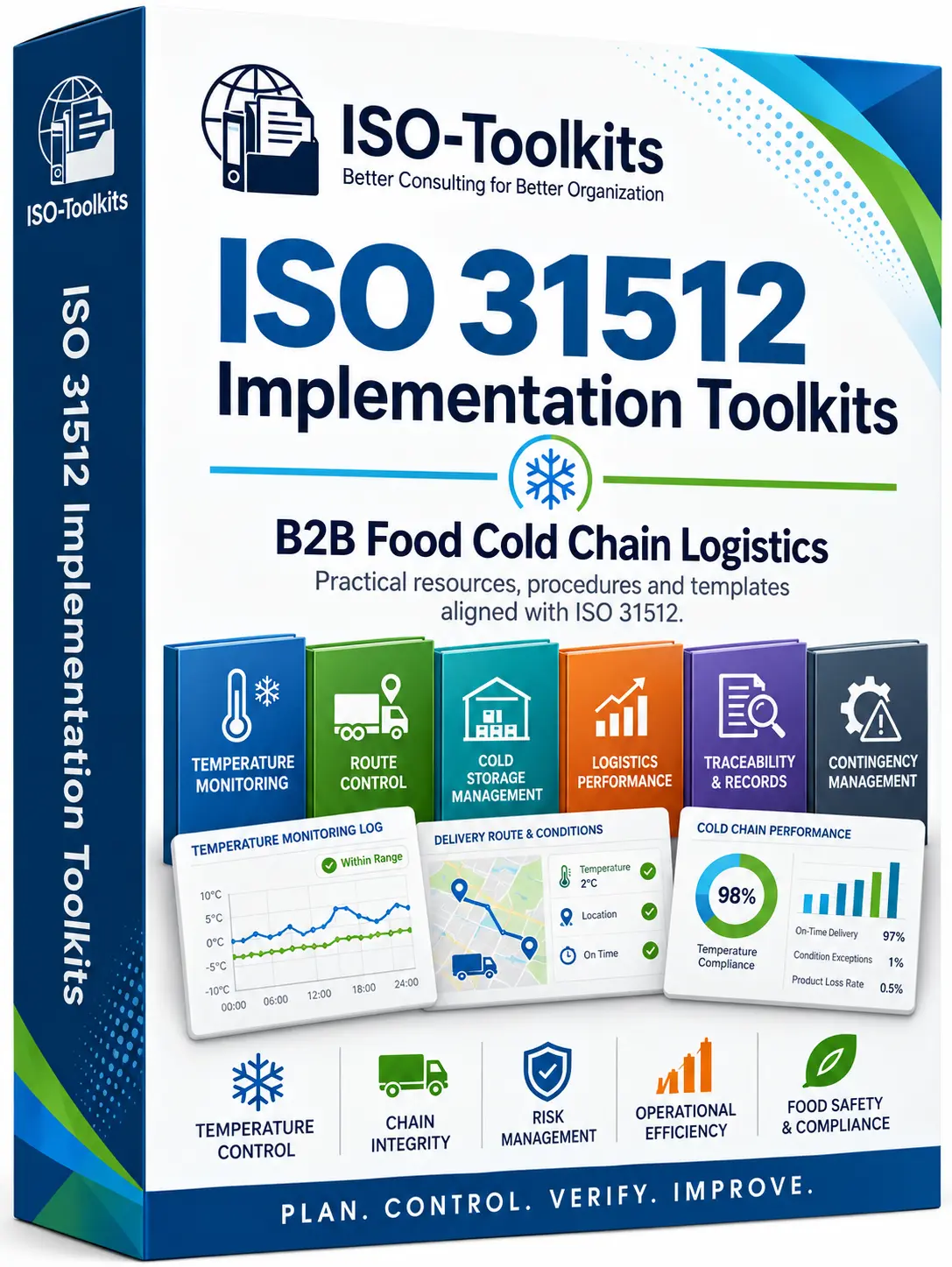
Implementing reliable B2B cold chain logistics requires coordinated controls across refrigerated warehouses, loading docks, refrigeration systems, temperature sensors, subcontracted providers, inbound cargo, storage, inventory, picking, dispatch, vehicle readiness, pre cooling, loading, in transit monitoring, cross docking, delivery, hygiene, competence, emergency response, traceability, customer requirements, and performance evaluation.
The ISO 31512:2024 B2B Food Cold Chain Logistics Implementation Toolkit provides a comprehensive collection of easy to use templates and structured implementation documents in Word, Excel, and PowerPoint formats. It helps organizations accelerate implementation, standardize storage and transport activities, strengthen temperature monitoring and measurement assurance, improve cargo traceability and custody controls, manage outsourced cold chain services, and maintain stronger evidence for audit, performance review, corrective action, and continual improvement.

ISO 31512 Toolkit Document Index
Below is the structured list of documents included in the package. Expand each part to review the files before downloading the index file.
 Part 1. Enterprise Cold Chain Governance and Programme Initiation
 Enterprise B2B Cold Chain Logistics Policy.docx ISO 31512 Implementation Charter.docx Cold Chain Service Governance and Accountability Procedure.docx
 Enterprise Cold Chain Site and Fleet Scope Register.xlsx Cold Chain Service RACI Matrix.xlsx Implementation Roadmap and Action Tracker.xlsx
 Enterprise ISO 31512 Programme Kickoff.pptx
Part 2. Service Scope, Applicability and Gap Assessment
B2B Cold Chain Service Scope and Boundaries.docx ISO 31512 Gap Assessment and Remediation Plan.docx ISO 31512 Requirements and Applicability Matrix.xlsx Multi Site and Fleet Cold Chain Gap Assessment.xlsx Service Activity and Responsibility Mapping.xlsx Gap Remediation and Investment Register.xlsx ISO 31512 Readiness and Gap Review.pptxPart 3. Customer Service Requirements and Contractual Conditions
Refrigerated Storage Service Agreement Template.docx Refrigerated Transport Service Agreement Template.docx Service Condition Confirmation and Change Procedure.docx Customer Food Product and Temperature Requirement Matrix.xlsx Contract Service Level and Cargo Handling Requirements Register.xlsx Agreed Storage Period and Capacity Checklist.xlsx Customer Service Change and Approval Log.xlsx Customer Cold Chain Service Requirements Review.pptxPart 4. Cold Chain Network Design, Capacity and Operational Planning
Multi Site Cold Chain Network and Capacity Plan.docx Refrigerated Storage and Transport Capacity Planning Procedure.docx Warehouse Chamber and Storage Capacity Register.xlsx Fleet Refrigerated Compartment and Load Capacity Matrix.xlsx Seasonal Demand and Cold Chain Capacity Forecast.xlsx Warehouse Transport Interface and Responsibility Map.xlsx Cold Chain Network and Capacity Design Review.pptxPart 5. Refrigerated Warehouse Facilities, Dock Areas and Zoning
Refrigerated Warehouse Premises and Zone Control Procedure.docx Temperature Controlled Loading Dock and Air Leakage Prevention Procedure.docx Refrigerated Facility and Dock Readiness Checklist.xlsx Cold Chamber Temperature Zone and Product Compatibility Matrix.xlsx Dock Door Shelter Air Curtain and Seal Inspection Log.xlsx Warehouse Facility Defect and Repair Register.xlsx Refrigerated Warehouse and Loading Dock Review.pptxPart 6. Refrigeration Equipment, Preventive Maintenance and Reliability
Refrigeration Plant and Cold Storage Equipment Operation Procedure.docx Refrigeration Equipment Maintenance and Release Procedure.docx Refrigeration Equipment and Cold Chamber Asset Register.xlsx Preventive Maintenance and Defect Tracker.xlsx Refrigeration Alarm and Equipment Failure Log.xlsx Backup Cooling Power and Redundancy Readiness Checklist.xlsx Refrigeration Reliability and Maintenance Review.pptxPart 7. Temperature Monitoring, Measurement Assurance and Data Control
Temperature Monitoring Alarm and Recording Procedure.docx Temperature Sensor Data Logger and Calibration Control Procedure.docx Storage and Transport Temperature Setpoint Register.xlsx Temperature Probe and Data Logger Calibration Register.xlsx Temperature Monitoring Alarm Test and Response Log.xlsx Temperature Data Integrity and Record Review Checklist.xlsx Temperature Monitoring and Metrology Review.pptxPart 8. External Cold Chain Providers and Subcontracted Operations
Third Party Refrigerated Logistics Provider Control Procedure.docx Subcontracted Cold Chain Service Requirements and Responsibilities.docx Approved Third Party Cold Chain Provider Register.xlsx Subcontractor Warehouse and Fleet Capability Assessment.xlsx Subcontracted Service Temperature and Deliverables Matrix.xlsx External Provider Performance and Corrective Action Register.xlsx Third Party Cold Chain Service Alignment Review.pptxPart 9. Inbound Delivery, Unloading and Cargo Acceptance
Refrigerated Warehouse Inbound Unloading and Inspection Procedure.docx Inbound Cargo Nonconformity and Acceptance Decision Procedure.docx Inbound Vehicle Compartment and Cargo Inspection Checklist.xlsx Inbound Cargo Temperature Quantity and Condition Log.xlsx Inbound Cargo Identification and Receipt Register.xlsx Inbound Rejection Quarantine and Customer Notification Log.xlsx Inbound Unloading and Cargo Acceptance Review.pptxPart 10. Refrigerated Storage, Product Segregation and Inventory Control
Refrigerated Storage and Inventory Control Procedure.docx Chilled Frozen and Ventilated Product Segregation Procedure.docx Cold Chamber Temperature and Storage Condition Log.xlsx Product Storage Location Lot and Inventory Register.xlsx Product Compatibility and Temperature Zone Allocation Matrix.xlsx Stock Rotation Expiry and Storage Condition Checklist.xlsx Refrigerated Storage and Inventory Control Review.pptxPart 11. Internal Handling, Order Picking and Cargo Protection
Cold Store Cargo Handling and Exposure Time Control Procedure.docx Temperature Controlled Picking Consolidation and Packing Procedure.docx Cold Store Handling and Exposure Time Monitoring Log.xlsx Order Picking Product Condition and Temperature Checklist.xlsx Cargo Handling Equipment Hygiene and Readiness Checklist.xlsx Picking and Consolidation Exception Register.xlsx Cold Chain Picking and Handling Workshop.pptxPart 12. Warehouse Dispatch, Staging and Custody Transfer
Refrigerated Warehouse Dispatch and Load Release Procedure.docx Warehouse to Carrier Cargo Transfer and Handover Procedure.docx Dispatch Cargo Condition and Temperature Release Checklist.xlsx Temperature Controlled Staging Dwell Time Register.xlsx Warehouse to Carrier Handover and Seal Log.xlsx Shipment Manifest Lot and Logistic Unit Register.xlsx Cold Storage Dispatch and Transfer Review.pptxPart 13. Refrigerated Vehicle Readiness, Qualification and Maintenance
Refrigerated Vehicle and Compartment Suitability Procedure.docx Vehicle Refrigeration Maintenance and Pre Trip Inspection Procedure.docx Refrigerated Compartment Temperature Performance Qualification Plan.docx Refrigerated Fleet and Compartment Master Register.xlsx Pre Trip Refrigeration and Compartment Inspection Checklist.xlsx Vehicle Refrigeration Preventive Maintenance Schedule.xlsx Vehicle Temperature Performance Test and Qualification Register.xlsx Refrigerated Fleet Readiness and Qualification Review.pptxPart 14. Transport Service Planning, Pre-Cooling and Loading
B2B Refrigerated Transport Service Planning Procedure.docx Refrigerated Vehicle Pre Cooling Loading and Seal Control Procedure.docx Transport Service Order and Temperature Requirement Register.xlsx Route Schedule and Transit Time Planning Matrix.xlsx Vehicle Pre Cooling Setpoint and Load Readiness Log.xlsx Loading Sequence Compatibility and Seal Checklist.xlsx Transport Service and Loading Readiness Review.pptxPart 15. In-Transit Refrigeration, Temperature Control and Journey Records
In Transit Temperature Monitoring and Cargo Protection Procedure.docx Driver Refrigeration Alarm and Transport Deviation Response Procedure.docx Trip Temperature Data and Alarm Review Log.xlsx Driver Journey Checkpoint and Refrigeration Status Log.xlsx Door Opening Stop and Temperature Exposure Register.xlsx Transport Deviation and Customer Escalation Log.xlsx In Transit Cold Chain Assurance Review.pptxPart 16. Intermediate Cargo Transfers and Cross-Docking
Refrigerated Transfer and Cross Docking Procedure.docx Vehicle to Vehicle Cargo Handover and Temperature Control Procedure.docx Cross Dock and Transfer Area Readiness Checklist.xlsx Cargo Transfer Time Temperature and Seal Integrity Log.xlsx Transfer Unit Traceability and Custody Register.xlsx Cross Dock Deviation and Hold Action Log.xlsx Intermediate Transfer and Cross Docking Review.pptxPart 17. Delivery, Unloading and Proof of Service
Refrigerated Delivery Unloading and Customer Handover Procedure.docx Delivery Condition Discrepancy and Claim Handling Procedure.docx Delivery Cargo Temperature Condition and Quantity Checklist.xlsx Customer Proof of Delivery and Cargo Handover Register.xlsx Rejected or Damaged Cargo and Return Disposition Log.xlsx Delivery Incident and Service Recovery Tracker.xlsx Refrigerated Delivery and Service Acceptance Review.pptxPart 18. Cargo Hygiene, Security, Personnel and Driver Competence
Cold Chain Facility Vehicle and Cargo Hygiene Procedure.docx Warehouse Personnel Driver and Contractor Training Plan.docx Warehouse Vehicle Cleaning and Sanitation Register.xlsx Cargo Security Seal and Access Control Checklist.xlsx Cold Chain Staff and Driver Competence Matrix.xlsx Personnel Hygiene and Service Training Attendance Log.xlsx Cold Chain Hygiene Security and Competence Training.pptxPart 19. Temperature Excursions, Emergency Response and Service Continuity
Cold Chain Temperature Excursion Investigation and Disposition Procedure.docx Refrigeration Failure Emergency Transfer and Recovery Plan.docx Business Continuity and Customer Incident Communication Procedure.docx Temperature Excursion Impact Assessment and Disposition Register.xlsx Emergency Cold Storage or Vehicle Transfer Tracker.xlsx Power Loss Refrigeration Failure and Incident Log.xlsx Emergency Equipment and Alternative Capacity Readiness Checklist.xlsx Emergency Drill Corrective Action and Closure Register.xlsx Cold Chain Emergency and Recovery Exercise.pptxPart 20. Service Traceability, KPI Monitoring and Customer Feedback
Cold Chain Shipment Traceability and Record Retention Procedure.docx B2B Cold Chain Service Performance and Customer Feedback Procedure.docx Cargo Lot Shipment Storage and Delivery Traceability Matrix.xlsx Service Level Temperature Compliance and On Time KPI Dashboard.xlsx Customer Complaint Claim and Service Recovery Register.xlsx End to End Cold Chain Record Completeness Checklist.xlsx Cold Chain Service Performance and Traceability Review.pptxPart 21. Internal Audit, Management Review and Enterprise Handover
ISO 31512 Internal Audit and Corrective Action Procedure.docx Cold Chain Management Review and Performance Improvement Procedure.docx Enterprise ISO 31512 Implementation Handover and Sustainment Plan.docx ISO 31512 Storage and Transport Internal Audit Checklist.xlsx Multi Site and Fleet Audit and Review Schedule.xlsx Nonconformity Corrective Action and Root Cause Register.xlsx Continuous Improvement and Lessons Learned Register.xlsx ISO 31512 Implementation Closeout and Approval Checklist.xlsx Enterprise Cold Chain Management Review and Closeout.pptxReview the complete file index, preview free sample templates, or check the purchase and payment guide.
ISO 31512 Toolkit Package & Download Information
| Date File Updated | 21/11/2024 |
| File Format | doc, docx, xls, xlsx, ppt, pptx |
| No. of files | 107 File; 10 Folders |
| File download size | 10.12 MB (rar). |
| Language |
 English |
| Purchase code | ISO31512-Toolkits |
Ready to Implement ISO 31512:2024?
Start with the complete ISO 31512 B2B food cold chain logistics toolkit or review the free sample before purchasing.
The ISO 31512 toolkit helped us connect warehouse and transport controls into one end to end cold chain service process instead of managing separate records.
The customer temperature requirements, service agreements, network capacity, warehouse zones, and transport interfaces made our cold chain planning much more systematic.
The refrigeration asset, maintenance, alarms, backup power, temperature sensor, calibration, and data integrity tools strengthened our temperature assurance programme.
The provider approval, inbound inspection, cargo acceptance, quarantine, storage location, lot, expiry, and product compatibility records were very practical.
The picking, exposure time, staging, dispatch, seal, manifest, and warehouse to carrier handover templates improved our custody transfer controls.
The refrigerated fleet register, pre trip inspection, vehicle qualification, pre cooling, loading, route, and transit time tools fit well with our transport operations.
The trip temperature, alarm, checkpoint, door opening, exposure, transport deviation, and customer escalation records were particularly useful for journey control.
The cross docking, vehicle to vehicle handover, transfer time, temperature, seal integrity, traceability, hold, and deviation tools improved intermediate transfers.
The delivery temperature, proof of delivery, cargo condition, rejected cargo, claims, service recovery, hygiene, and sanitation records helped standardize customer handover.
The cargo security, seal control, staff competence, driver training, temperature excursion, refrigeration failure, and emergency transfer tools gave us a stronger response framework.
The shipment traceability, service KPI, temperature compliance, on time delivery, complaints, record completeness, and customer feedback tools improved our performance reviews.
The internal audit, nonconformity, root cause, corrective action, management review, continuous improvement, closeout, and handover templates gave us a clear sustainment framework.